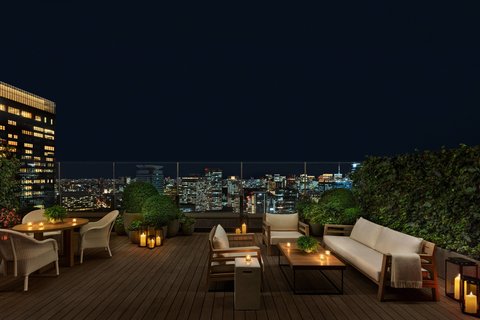
Tokyo has no shortage of luxury hotels competing loudly for your attention — but the Tokyo EDITION Toranomon earns its rate by doing almost the opposite of competing. Tucked into the emerging skyline of Toranomon Hills, it is a hotel that reveals itself slowly, the way a well-designed room does when you finally stop moving and sit still.
Best Timing
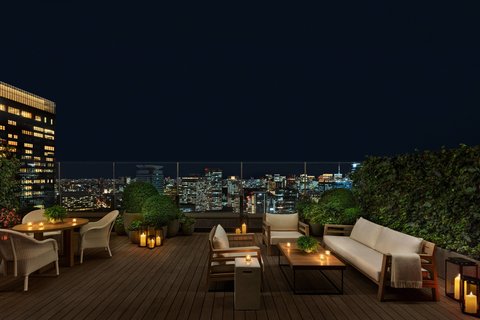
Toranomon is a business and diplomatic district, which means the hotel operates at its most serene from Thursday through Sunday, when the weekday professional crowd thins and the lobby finds its quiet rhythm. The best time to experience the hotel’s signature dawn atmosphere is between 5:30 and 7:30 a.m. — high-floor rooms catch the first light breaking over Toranomon Hills Tower before the haze builds. For the city outside, late March through early May (cherry blossom season into golden spring) and mid-October through November (crisp air, low humidity, sharp skylines) are the two windows where Tokyo looks exactly as good as you imagined it would.
Rain is not your enemy here. The EDITION Toranomon is designed for inward experience — the lobby, the bar, the spa, the breakfast room — and a grey Tokyo morning can actually make the interior spaces feel more deliberate, more cinematic. Pack accordingly and consider a wet-season stay for lower rates and smaller crowds.
Core Experiences
The Lobby Arrival Experience
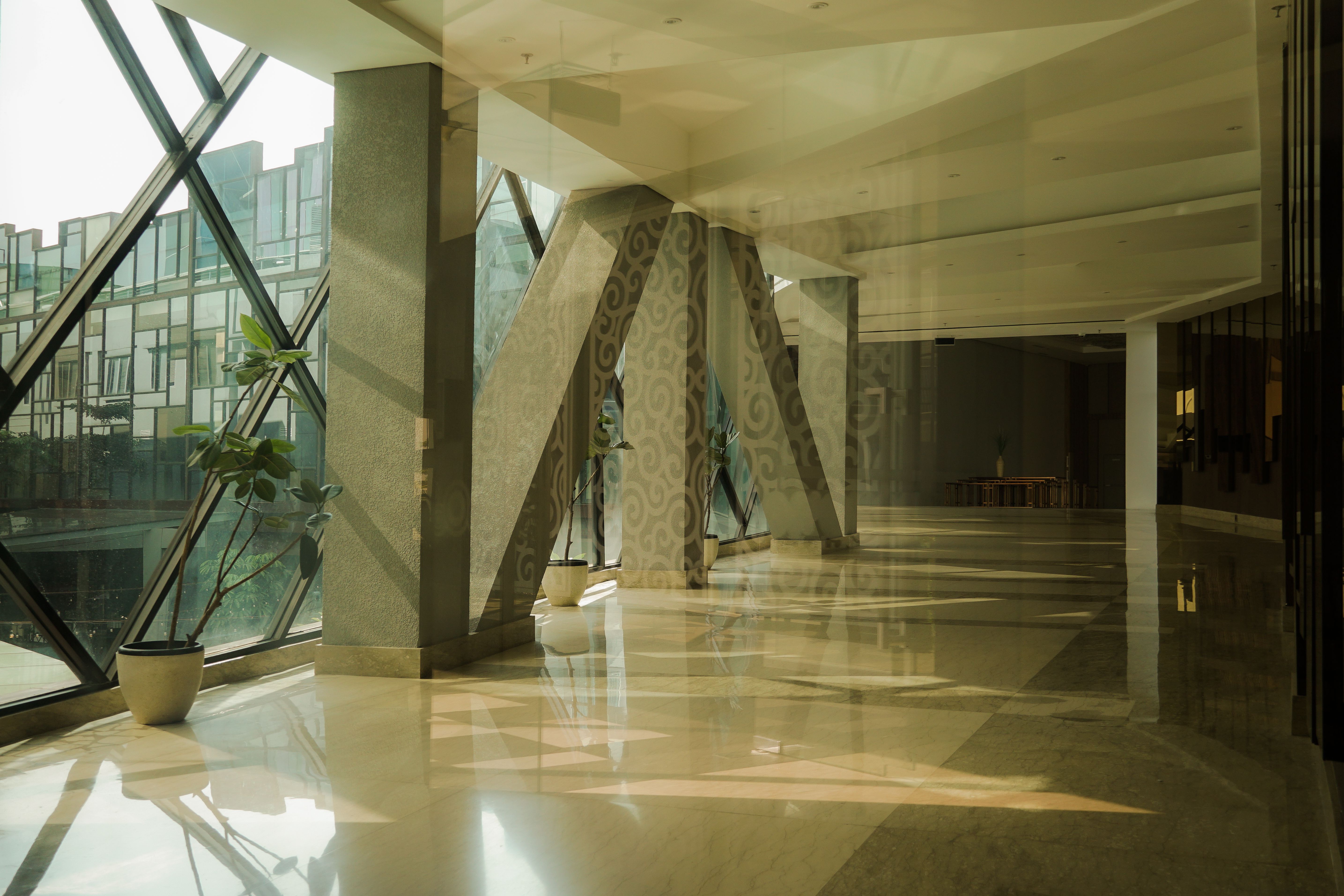
The arrival at the EDITION Toranomon does not announce itself with a grand porte-cochère or a valet parade. The entrance is intentionally understated — almost residential in scale — before the lobby opens into a double-height space finished in warm stone, raw oak, and brass hardware that catches the lamplight rather than reflecting it. Ian Schrager’s editorial design language is present in every surface decision: the furniture is low and inviting, the art is chosen rather than commissioned-to-impress, and the front desk is more of a quiet counter than a formal station. Check-in feels like being handed the key to an apartment that someone tasteful already lived in.
- 📍 1-4-1 Toranomon, Minato-ku, Tokyo · 🚇 3-min walk from Toranomon Hills Station (Hibiya Line)
- 💰 Nightly rates from approx. ¥80,000–¥160,000 depending on season and floor
- ⏰ Check-in from 15:00 / Check-out 12:00
- ⭐ 4.7 / 5.0 (aggregated guest score)
What insiders know: Request a Toranomon Hills–facing room specifically at booking — not all high-floor rooms have the same orientation, and the difference at dawn is significant.
The High-Floor Room — View Over Toranomon Hills
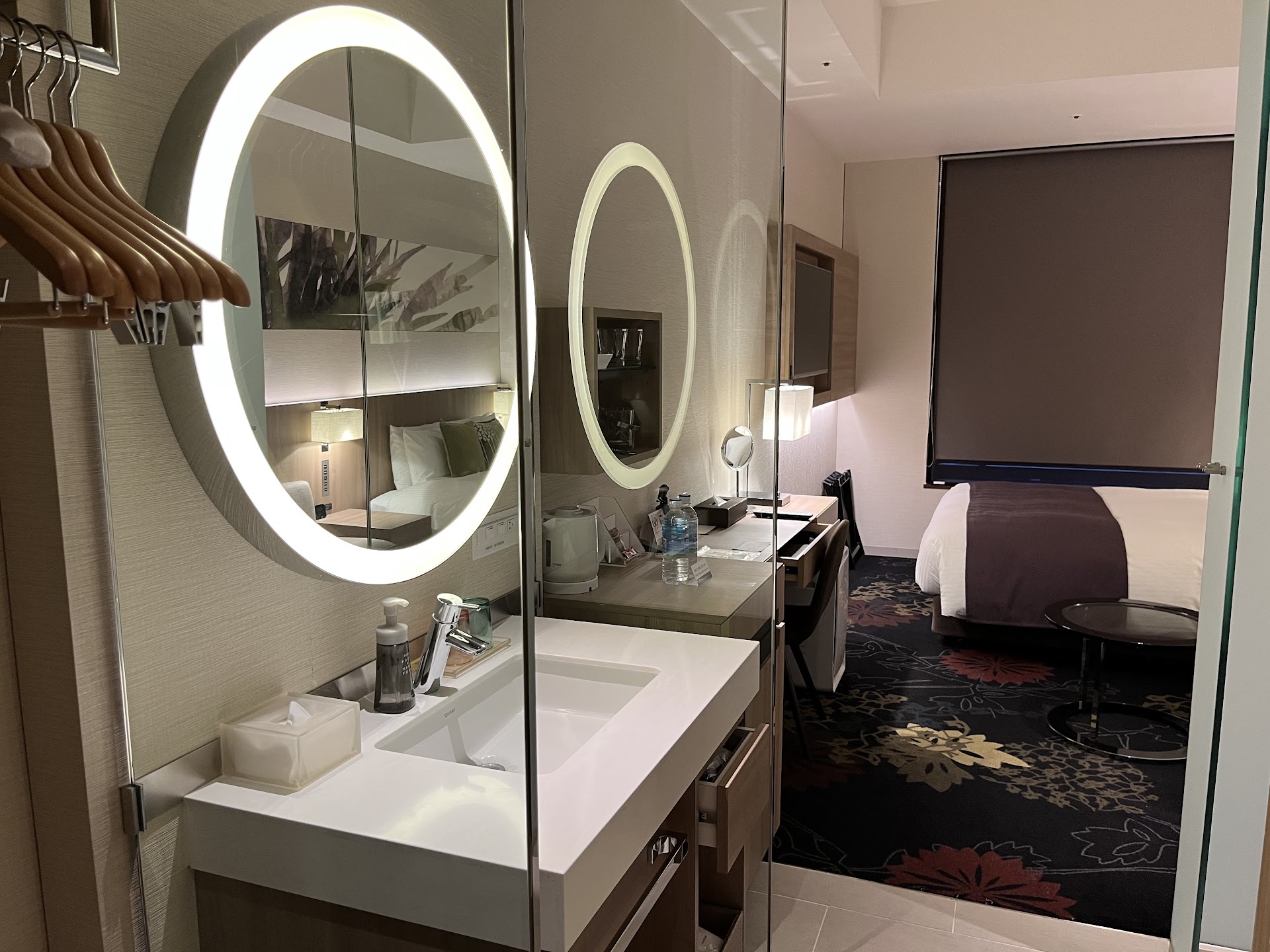
The rooms are where the EDITION’s design argument becomes personal. At around 40–55 sqm for a standard Deluxe King, the scale is generous without being cavernous — a deliberate choice that keeps the space feeling intimate rather than institutional. Floor-to-ceiling windows frame the Toranomon Hills complex and Tokyo Bay beyond, a skyline that is notably less cluttered on this western exposure than the Shinjuku or Shibuya views many guests expect from Tokyo luxury. At dawn, the glass catches a pale blue light for roughly twenty minutes before it warms — a detail that feels designed into the architecture, though it is simply geography working in the hotel’s favor. The bed linen is weighted, the blackout curtains run on a motorized track, and the minibar includes Okinawan awamori alongside the expected whisky selection.
- 📍 Floors 31–38 (Deluxe and above categories)
- 💰 Deluxe King from ¥80,000/night · Premier High Floor from ¥120,000+
- ⏰ Room access throughout stay; dawn window best 05:30–07:00
- ⭐ 4.8 / 5.0 for room quality (recent guest reviews)
What insiders know: Floors 35 and above are the threshold where the Toranomon Hills skybridge becomes fully visible below — a compositional detail that makes the view feel three-dimensional rather than flat.
Lobby Bar — Drinks and Design at Altitude
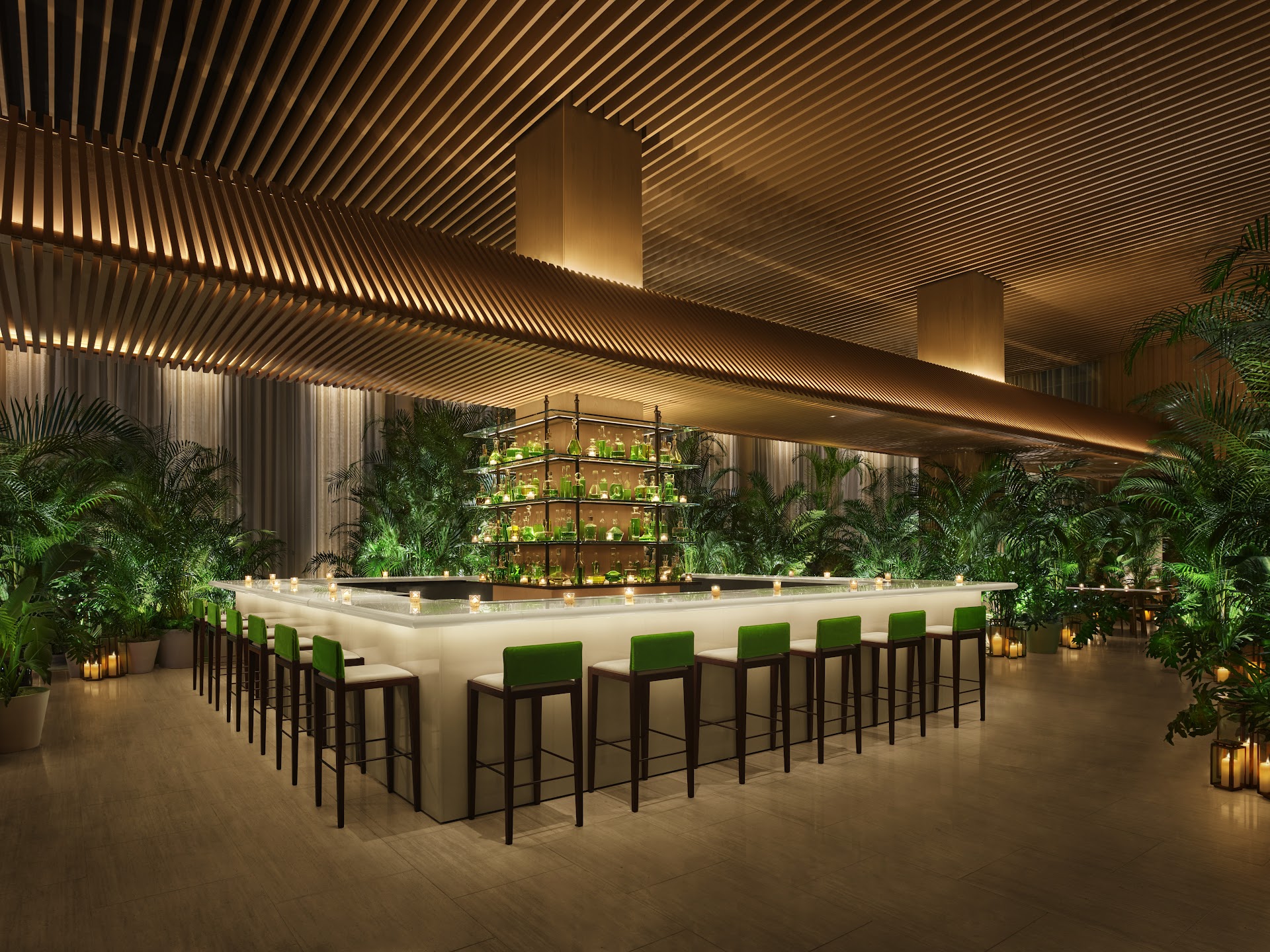
The EDITION’s Lobby Bar is not a rooftop bar in the conventional sense, but its position within the building and the floor-to-ceiling glazing create an effect that is arguably more considered than an open terrace. The cocktail program leans into Japanese spirits — yuzu-forward highballs, whisky long drinks built around Nikka and Mars Shinshu, a rotating seasonal gin selection — without the theatrical flourishes that lesser hotel bars use as a substitute for quality. The bar opens at 17:00 and the 18:00–19:30 window is the sweet spot: last of the sun on the western glass, city below just beginning to illuminate, and the room at perhaps one-third capacity. The bar snacks (house-made rice crackers, wagyu tartare on toasted brioche) are priced as hotel bar food but executed at a level that earns it.
- 📍 Level 31, Tokyo EDITION Toranomon
- 💰 Cocktails ¥2,200–¥3,800 · Bar snacks ¥1,800–¥4,500
- ⏰ 17:00–01:00 daily (last order 00:30)
- ⭐ 4.6 / 5.0
What insiders know: The corner banquette seats on the south-facing wall are not listed as reservable but can be requested at the bar when booking a table — they offer both the view and the room in a single sightline.
Breakfast at Matsurica — What the Hotel Tells You About Tokyo
Breakfast at a hotel reveals the institution’s actual hospitality philosophy faster than any press release. At Matsurica, the EDITION’s all-day dining restaurant, the breakfast service is built around a Japanese-Western hybrid menu that takes both sides seriously rather than treating either as a concession to the other. The Japanese set includes house dashi-rolled tamago, simmered hijiki, miso with Kyoto fu, and steamed rice from a Niigata producer — simple, precisely sourced, deeply restorative. The Western option offers a properly flaky croissant, soft scrambled eggs with domestic cream, and seasonal fruit plated without the garnish overkill of most hotel breakfasts. What the service reveals about the hotel: an attentiveness to pacing that mirrors the overall design ethos — unhurried, observant, calibrated.
- 📍 Level 31, Tokyo EDITION Toranomon (Matsurica)
- 💰 Breakfast included in some rates · À la carte Japanese set ¥4,800 / Western set ¥4,200
- ⏰ 07:00–10:30 (weekdays) / 07:00–11:00 (weekends)
- ⭐ 4.5 / 5.0
What insiders know: The 07:00–07:45 window on weekdays is consistently quieter than post-8:00 — business travelers tend to have later starts than you’d expect, and the room never fully fills before 8:15.
The 10-Minute Walk — Toranomon Hills and Environs
The hotel’s location in Toranomon is part of its value proposition and its most debated feature. This is not Shinjuku or Asakusa — there is no immediately legible Tokyo tourism script within walking distance. What there is: the Toranomon Hills complex itself (the main tower, the business tower, and the mori tower connected by elevated walkways), the quiet embassy-district streets of Azabudai Hills opening to the south, and a five-minute walk east to Kamiyacho, where a cluster of old-neighborhood cafés and the excellent Toranomon Coffee operate alongside suit-and-tie lunch counters that have been feeding bureaucrats and diplomats for decades. The 10-minute walk outside the front door is not spectacular — it is instructive. This is the Tokyo that functions rather than performs, and it contextualizes the hotel’s own composure as an honest architectural response to the neighborhood’s character.
- 📍 Toranomon Hills Station Area, Minato-ku · 🚇 Hibiya Line (direct) / Ginza Line (7-min walk)
- 💰 Free to explore · Toranomon Coffee espresso ¥550
- ⏰ Neighborhood accessible 24/7 · Best explored 07:00–09:00 or 17:00–19:00
- ⭐ 4.4 / 5.0 (for location utility, not spectacle)
What insiders know: The elevated walkway connecting the Toranomon Hills towers offers a car-free, crowd-free elevated perspective of the district that photographs well in early morning flat light — less famous than the Roppongi Midtown promenade and significantly less crowded.
Recommended Route
This is a stay-in itinerary built for the guest who wants to extract maximum signal from a single night or a 36-hour window.
- 05:30 — Wake before the alarm. Open the blackout curtains to the dawn light over Toranomon Hills. This is not optional — it is the room’s best moment.
- 07:00 — Breakfast at Matsurica (arrive at opening for the quietest table). Choose the Japanese set. Budget 45 minutes.
- 08:00 — Walk the elevated Toranomon Hills walkways before the commuter flow peaks. Continue 5 min east to Toranomon Coffee for a second coffee.
- 09:00 — Return to the hotel. If booked: spa (treatments start at 10:00, reserve in advance). If not: explore the lobby and the hotel’s art installations at their most unhurried.
- 12:00 — Check out or extend. The hotel offers late checkout to 14:00 on request (subject to availability; ask the evening before).
- 17:00 (if a second evening) — Lobby Bar from opening. 18:00–19:30 is the golden window. Order the seasonal highball first, the wagyu tartare alongside.
- 20:00 — Dinner outside the hotel: a 12-minute walk south reaches Azabudai Hills and its restaurant level; 8 minutes east is the Kamiyacho neighborhood for ramen and yakitori at non-hotel prices.
Budget · Transport · Booking
Room cost: Nightly rates range from approximately ¥80,000 (standard Deluxe King) to ¥200,000+ (suite tiers). Peak pricing applies during cherry blossom season (late March–early April) and New Year’s. Book directly through the EDITION website or Marriott Bonvoy for best rate guarantee and potential Bonvoy points accrual.
Breakfast: Included in some rate packages; standalone à la carte runs ¥4,200–¥4,800 per set. Worth factoring into the rate comparison — the quality justifies skipping an external breakfast.
Bar spend: Budget ¥6,000–¥10,000 per person for a proper Lobby Bar session (two cocktails, bar snacks).
Transport to hotel:
- 🚇 From Tokyo Station: Marunouchi Line to Kasumigaseki → Hibiya Line to Toranomon Hills — approx. 20 min, ¥220
- 🚇 From Haneda Airport: Keikyu Line to Shinbashi → Ginza Line to Toranomon — approx. 35 min, ¥650
- 🚕 From Narita Airport: taxi is prohibitive (¥25,000+); take the Narita Express to Tokyo Station then transfer as above
Advance booking: Reserve the room minimum 3–4 weeks ahead for standard categories; 6–8 weeks for peak season or suite tiers. Spa treatments should be booked at least 48 hours in advance through the hotel concierge — walk-in availability is rare.
Total day budget (single night, per person, midrange approach): ¥90,000–¥110,000 all-in (room share, breakfast, bar, neighborhood meals).
Must-Know Tips
- 💰 Rate vs. value comparison: The EDITION Toranomon prices comparably to the Andaz Toranomon Hills next door — the key differentiator is design restraint. The Andaz is louder; the EDITION is quieter. Choose based on which vocabulary appeals.
- 🚇 Hibiya Line is the unlock: The Hibiya Line from Toranomon Hills connects directly to Ginza (2 stops), Roppongi (3 stops), and Nakameguro (5 stops) — the hotel’s location becomes far more central than the address suggests once you understand this line.
- 📸 Photography rules: The lobby and public areas allow personal photography. Do not photograph other guests at the bar or restaurant — the clientele includes diplomatic and business figures who expect discretion, and staff will quietly intervene.
- 💳 Payment: The hotel accepts all major cards. For the neighborhood walk (Toranomon Coffee, local lunch counters near Kamiyacho), carry ¥3,000–¥5,000 cash — several smaller establishments remain cash-preferred.
- 👗 Dress code: No formal dress code stated, but the bar and restaurant operate at a quietly elevated standard. Smart casual is the floor — sneakers are fine if the rest of the outfit is considered.
- 🗣️ Language: Front desk and concierge staff are fully English-proficient. At the bar and restaurant, English menus are available and staff can navigate questions — the level of service English here is among the best in Tokyo’s luxury tier.
Closing
The Tokyo EDITION Toranomon makes its case not through spectacle but through sustained quality of attention — the weight of the linen, the sourcing behind the tamago, the bar program built around restraint. In a city where luxury hotels can feel like theatrical sets, this one feels like an argument about what a hotel should actually be: a place that shapes how the city arrives in your senses, filtered through where you sleep. The rate is real, the competition is real, and for a specific kind of traveler — the one who wants Tokyo unhurried, intelligently framed, and honestly delivered — the EDITION Toranomon is worth every yen of it. Book a high-floor room, wake before dawn, and let the window do the work.
🏨 Where to Stay
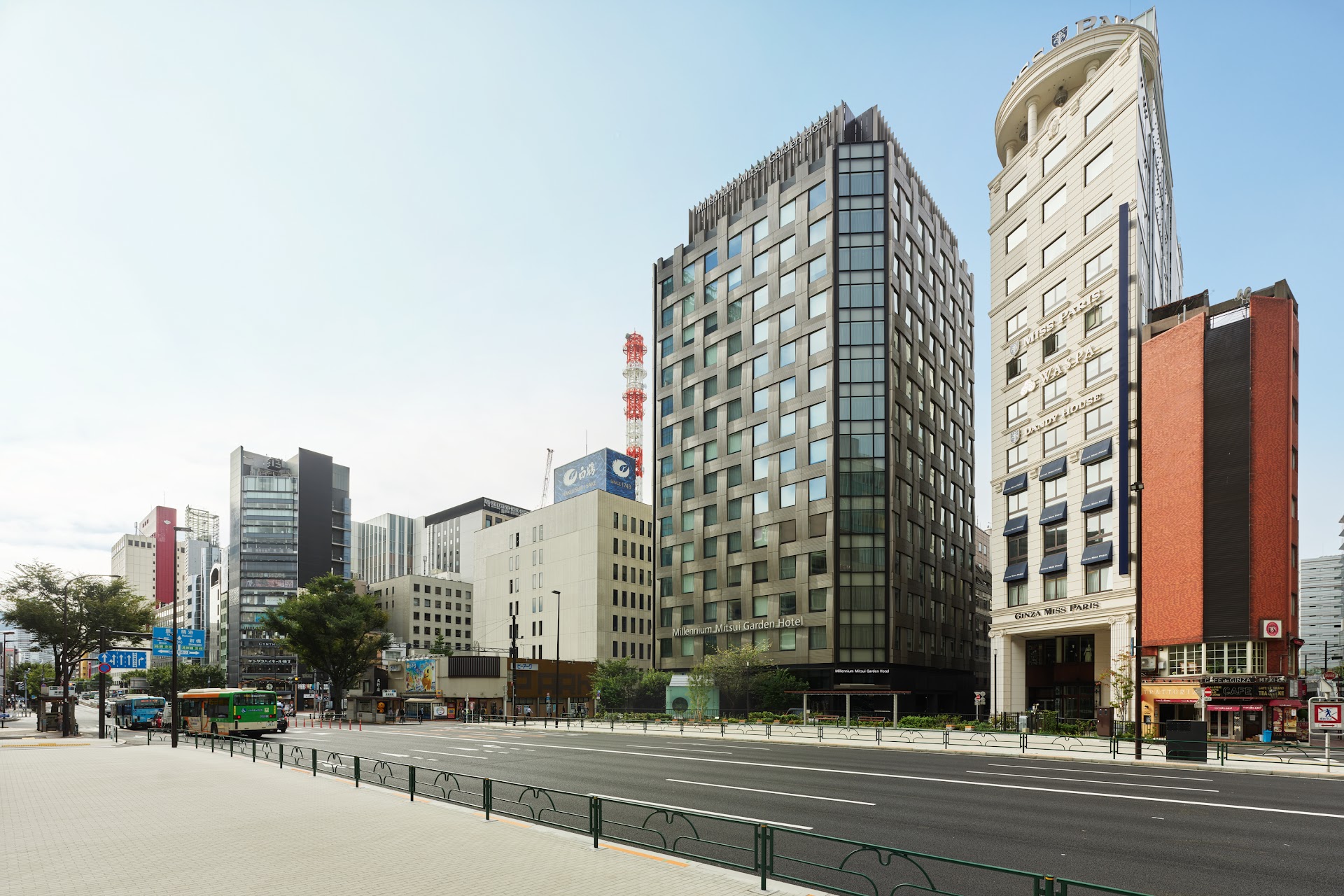
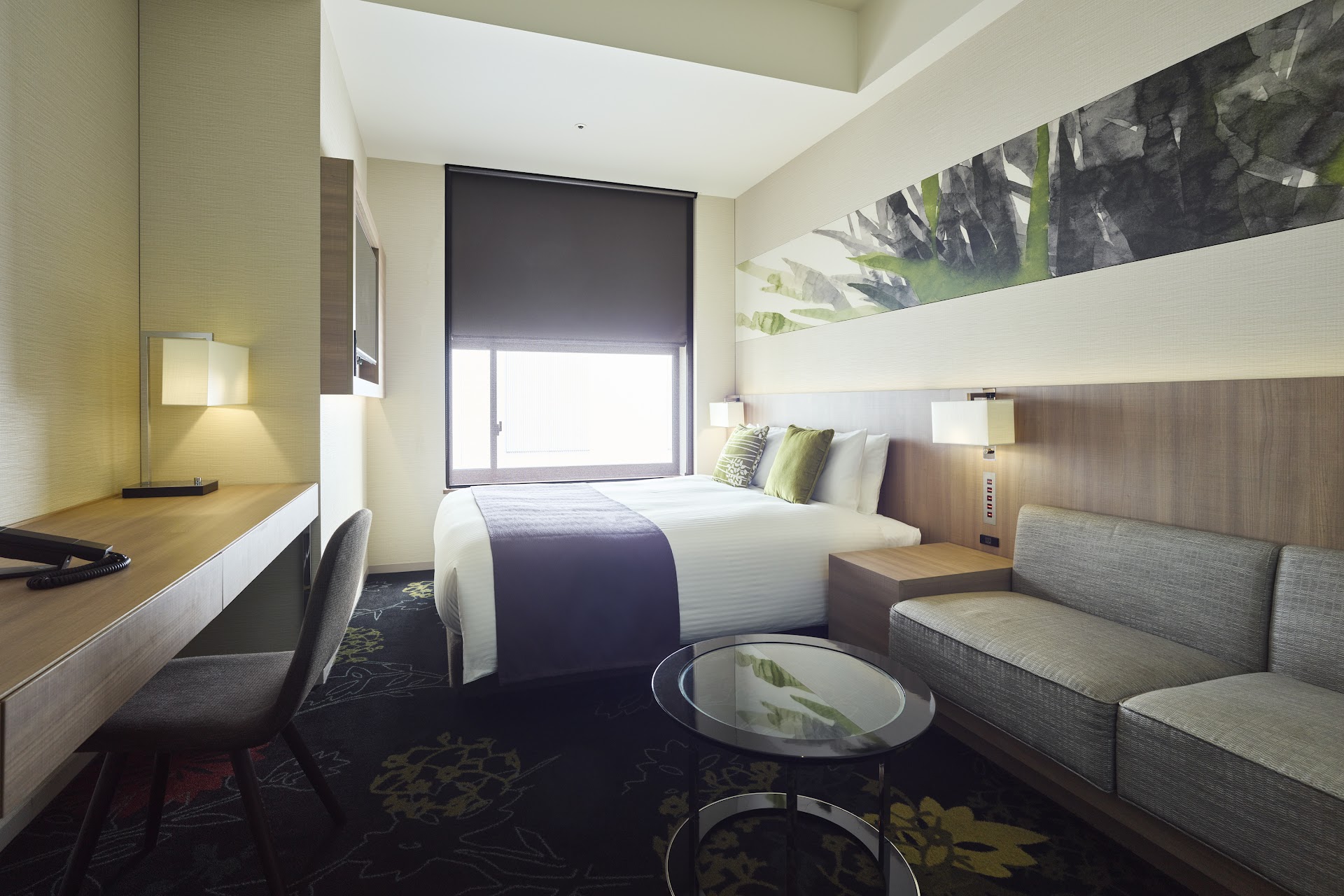 Millennium Mitsui Garden Hotel Tokyo / Ginza⭐ 5.0 · 8.9/10 (10,696) · $267 /night
 Mitsui Garden Hotel Ginza Tsukiji⭐ 4.0 · 9.0/10 (1,083) · $251 /night
 APA Hotel Pride Akasaka Kokkaigijidomae⭐ 4.0 · 8.6/10 (6,890) · $81 /night
Agoda affiliate link — clicks go to the price-comparison page.